
Antoine Dougbé Et T.P. Orchestre Poly-Rythmo
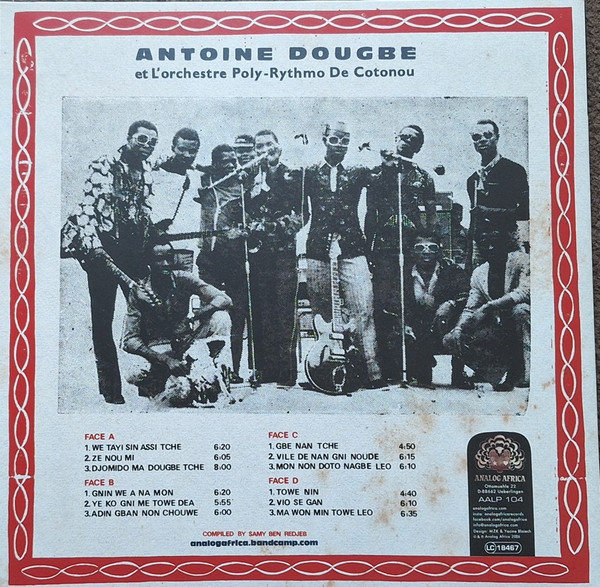
Antoine Dougbé Et L'orchestre Poly-Rythmo De Cotonou

€37.90
Add to basketTracked and send in specified vinyle packaging with plastic sleeve protection and stickers. Please feel free to ask informations about our products and sell conditions. We ship vinyles world wide from our shop based in Montpellier (France). Come to visit us. Le Discopathe propose news and 2nd hands vinyls, collectors, rare and classic records from past 70 years
*Taxes included, shipping price excluded
Share
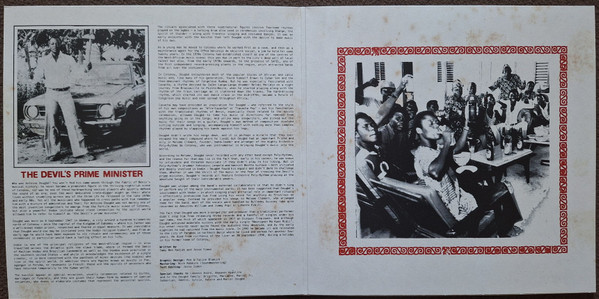
Who was Antoine Dougbé? Even the most dedicated crate-digger might go their whole life without stumbling across any of the three LPs he released in the late 1970s and early ’80s. Yet all the musicians who happened to cross paths with him remember him with a mixture of admiration and fear; for Antoine Dougbé was not merely one of the most inventive songwriters to emerge from the fertile music scene of Cotonou, but also a powerful Vodún initiate whose close connection to the spirit world allowed him to refer to himself as “the Devil’s prime minister.”
As a young man he moved from Abomey to Cotonou, a city that had established itself as one of the centres of the West African music scene. There he encountered most of the popular styles of African and Latin music and, like many of his generation, found himself drawn to Cuban son and rumba. Although he was particularly attracted to Congolese rhythms, it was his fascination with the traditional rhythms of Benin—especially those associated with Vodún ceremonies—that allowed Dougbé to take his music in directions far removed from anything happening in the Congo.
Early in his career, Dougbé was known for intimidating and threatening musicians if they didn’t play to his liking, and when the time came to find a band willing to record with him, he struggled. But according to Mélomé Clément, founder of the mighty Orchestre Poly-Rythmo de Cotonou, Dougbé posed no problem for them, since the band’s drummer, Yehouessi Leopold, and bassist, Bentho Gustave, were themselves initiated into Vodún and Dougbé never dared to challenge them.
Dougbé was unique among the band’s external collaborators in that he neither sang nor performed any of the main instrumental parts. It has been suggested that his involvement with Vodún—in which singing plays a crucial role in important rituals—effectively prohibited him from using his voice for anything as frivolous as a popular song. Instead he provided his songs to Melome Clément, who arranged them for the band; most of the vocals were handled by Lohento Eskill and Amoussou William.
Whether driven by the thrill of the music or by fear of crossing the Devil’s prime minister, Dougbé’s records all feature Orchestre Poly-Rythmo playing at the absolute height of their considerable powers.
Dougbé released three LPs and a handful of singles under his own name, the first, which appeared in 1977 on Disques Tropiques. And although Dougbé achieved moderate success with the early single “Nounignon Ma Kpon Midji”, his other records never quite found the audience they deserved, and by the early eighties he had vanished from the music scene.
Illness struck in 1992, prompting a move to Parakou in northern Benin, where he lived and worked for four more years. Antoine Dougbé died of cirrhosis of the liver on 20 September 1996, while on holiday in his former home of Cotonou—leaving behind a small but extraordinary body of work, and a legacy still wrapped in mystery.
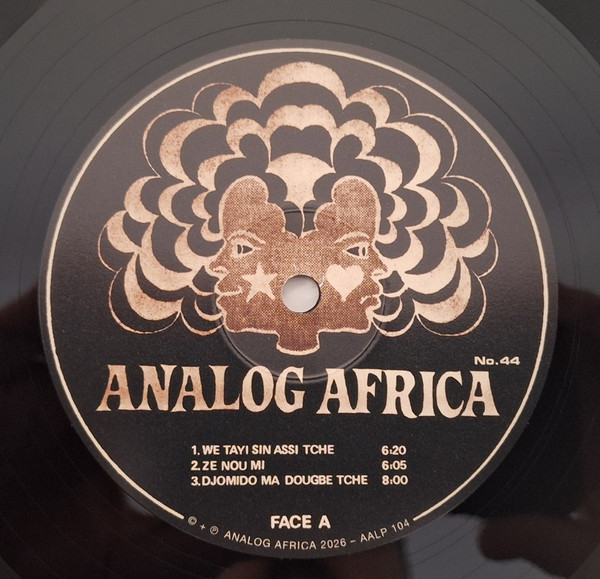
A1
We Tayi Sin Assi Tche
A2
Ze Nou Mi
A3
Djomido Ma Dougbe Tche
B1
Gnin We A Na Mon
B2
Ye Ko Gni Me Towe Dea
B3
Adin Gban Non Chouwe
C1
Gbe Nan Tche
C2
Vile De Nan Gni Noude
C3
Mon Non Doto Nagbe Leo
D1
Towe Nin
D2
Vio Se Gan
D3
Ma Won Min Towe Leo
Other items you may like


€32.90


Antoine Dougbé Et T.P. Orchestre Poly-Rythmo
Antoine Dougbé Et L'orchestre Poly-Rythmo De Cotonou
A1
We Tayi Sin Assi Tche
A2
Ze Nou Mi
A3
Djomido Ma Dougbe Tche
B1
Gnin We A Na Mon
B2
Ye Ko Gni Me Towe Dea
B3
Adin Gban Non Chouwe
C1
Gbe Nan Tche
C2
Vile De Nan Gni Noude
C3
Mon Non Doto Nagbe Leo
D1
Towe Nin
D2
Vio Se Gan
D3
Ma Won Min Towe Leo
€37.90
Add to basketTracked and send in specified vinyle packaging with plastic sleeve protection and stickers. Please feel free to ask informations about our products and sell conditions. We ship vinyles world wide from our shop based in Montpellier (France). Come to visit us. Le Discopathe propose news and 2nd hands vinyls, collectors, rare and classic records from past 70 years
*Taxes included, shipping price excluded
Share
Who was Antoine Dougbé? Even the most dedicated crate-digger might go their whole life without stumbling across any of the three LPs he released in the late 1970s and early ’80s. Yet all the musicians who happened to cross paths with him remember him with a mixture of admiration and fear; for Antoine Dougbé was not merely one of the most inventive songwriters to emerge from the fertile music scene of Cotonou, but also a powerful Vodún initiate whose close connection to the spirit world allowed him to refer to himself as “the Devil’s prime minister.”
As a young man he moved from Abomey to Cotonou, a city that had established itself as one of the centres of the West African music scene. There he encountered most of the popular styles of African and Latin music and, like many of his generation, found himself drawn to Cuban son and rumba. Although he was particularly attracted to Congolese rhythms, it was his fascination with the traditional rhythms of Benin—especially those associated with Vodún ceremonies—that allowed Dougbé to take his music in directions far removed from anything happening in the Congo.
Early in his career, Dougbé was known for intimidating and threatening musicians if they didn’t play to his liking, and when the time came to find a band willing to record with him, he struggled. But according to Mélomé Clément, founder of the mighty Orchestre Poly-Rythmo de Cotonou, Dougbé posed no problem for them, since the band’s drummer, Yehouessi Leopold, and bassist, Bentho Gustave, were themselves initiated into Vodún and Dougbé never dared to challenge them.
Dougbé was unique among the band’s external collaborators in that he neither sang nor performed any of the main instrumental parts. It has been suggested that his involvement with Vodún—in which singing plays a crucial role in important rituals—effectively prohibited him from using his voice for anything as frivolous as a popular song. Instead he provided his songs to Melome Clément, who arranged them for the band; most of the vocals were handled by Lohento Eskill and Amoussou William.
Whether driven by the thrill of the music or by fear of crossing the Devil’s prime minister, Dougbé’s records all feature Orchestre Poly-Rythmo playing at the absolute height of their considerable powers.
Dougbé released three LPs and a handful of singles under his own name, the first, which appeared in 1977 on Disques Tropiques. And although Dougbé achieved moderate success with the early single “Nounignon Ma Kpon Midji”, his other records never quite found the audience they deserved, and by the early eighties he had vanished from the music scene.
Illness struck in 1992, prompting a move to Parakou in northern Benin, where he lived and worked for four more years. Antoine Dougbé died of cirrhosis of the liver on 20 September 1996, while on holiday in his former home of Cotonou—leaving behind a small but extraordinary body of work, and a legacy still wrapped in mystery.
Other items you may like
€32.90